

Buying a Listed Building with Unauthorised Alterations: What You Need to Know
Grade II Listed Barn Conversion
Alteration:
Removal of a Queen Post Roof Truss Straining Beam
Deficiency:
Altered load path and a lack of listed building consent
Defect:
No physical defect, but a permanent enforement risk for the owner
There is a legal requirement to protect listed buildings from innappropriate alterations. Unauthorised works to a listed building remain in the fence indefinitely, and the liability passes with the title regardless of who carried out the works or when.
The subject property forms part of a Grade II listed, late eighteenth-century agricultural byre. The byre was converted into two dwellings with listed building consent. The roof has a half-hipped plain clay tile covering carried on a nine-bay queen post truss structure that runs the full length of the original building and is named in the Historic England listing description as a feature of the byre.
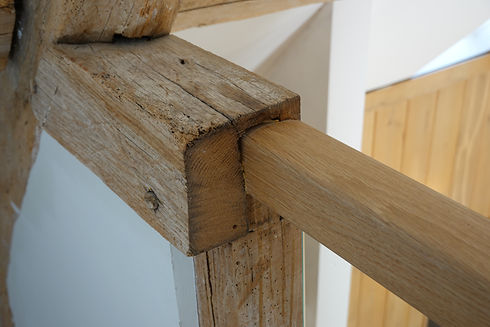
A straining beam for a queen post truss was been removed, and the works as built do not correspond to the plans the local authority consented.
Original Specification
Modern Alteration
Findings
A queen post truss is a closed, triangulated frame. The tie beam spans the base, two vertical queen posts rise from it, and the posts are held in tension so that they support the tie beam at intermediate points and stop it sagging across the span. The straining beam sits horizontally across the heads of the two posts and works in compression, propping the post tops apart and resisting any tendency to draw inward. It is not a collar resisting outward spread; it does the opposite job. Each member has a defined role, and the frame depends on all of them acting together. Repeated nine times along the building, this arrangement is the roof structure that the listing specifically protects.
The straining beam on one truss was removed to open up access into the mezzanine bedroom. That takes a compression member out of an otherwise complete frame and removes the bracing that holds the post heads apart. The wider issue is one of consent. The plans authorised did not include this alteration.
On inspection there was no indication of movement within the truss, and the beam has been absent for around ten years. The matter is therefore primarily a compliance issue rather than a structural one. That does not make it minor. There is no time limit on listed building enforcement: unlike most planning breaches, which can become immune after four or ten years, unauthorised works to a listed building remain an offence indefinitely, and the liability passes with the title regardless of who carried out the works or when.
Why this matters if you are buying an older property:
A heritage building has to be read as a system, and that system includes its paper trail as much as its fabric. When Russet and Sage survey a listed property, the listing description, the planning history and the consents granted are examined alongside the construction itself, because the most significant defect is not always one you can see. Here the roof is performing and nothing has cracked, yet the property carries a regulatory exposure that does not expire and transfers to whoever owns it next.
