top of page
Bledington lime repointing

           HERITAGE LIME            REPOINTING

1

​​Is this the right service for me?

Lime repointing and traditional repair are appropriate where masonry has been incorrectly repaired in the past, or where the original lime mortar has deteriorated and requires renewal.


This service is generally suitable if:

  • the building is traditionally constructed in stone or brick

  • cement-based mortars are present and causing damage

  • mortar joints are eroded, cracked or failing

  • repairs are required that respect the age and behaviour of the building


If you are unsure whether repointing is required, or would like independent advice before committing to work, a Targeted Condition Survey may be appropriate.

2

What the service covers

Lime repointing and repair are undertaken with a conservation-led approach, informed by an understanding of traditional materials and building behaviour.


The service may include:

  • assessment of existing mortar and masonry condition

  • careful removal of inappropriate or failed mortar

  • preparation of joints to minimise damage to surrounding masonry

  • repointing using appropriate lime mortars, matched for colour, texture and performance

  • traditional finishing techniques suited to the building

  • minor associated masonry repairs where appropriate

​

All work is undertaken with consideration of moisture movement, breathability and long-term fabric performance.

3

What the service does not cover

To avoid any uncertainty, this service does not include:

  • design or specification of major structural repairs

  • intrusive investigation unless specifically agreed

  • work requiring statutory consent unless already in place

  • guarantees beyond those appropriate to traditional materials and methods

​

Where additional investigation or specialist input is advisable, this will be discussed before work proceeds.

4

How clients typically use this service

Clients often commission lime repointing and repair to:


  • address damage caused by hard cement mortars

  • improve the weathering and performance of masonry

  • protect historic fabric from further deterioration

  • carry out repairs that are sympathetic and proportionate


The emphasis is on doing the right work, in the right way, rather than maximising intervention.


Relationship to surveying services


Lime repointing and repair sit alongside our surveying services.

Where appropriate, surveys may inform repair work, and repair work may highlight the need for further assessment.


However, advice and repair are clearly distinguished, and there is no obligation to proceed from one service to the other.

5

Fees

Repointing and repair work is priced following inspection and discussion, reflecting the scope, access and materials involved.


Where clarity is required before committing to works, a Targeted Condition Survey can be commissioned separately.

6

Next Steps

To discuss lime repointing or traditional repair, or to determine whether work is required, please get in touch.

Noke lime repointing

Lime mortar repointing

Repointing should go beyond the purely mechanical and functional. It should also be beautiful. Safeguarding historic buildings isn't just about the use of correct materials and techniques, it means ensuring the building is desirable, loved and cared for by the all of its future owners. 


We work with all forms of lime, from quicklime hot-mixing to putty, hydrated lime and natural hydraulic lime. The correct type will be selected depending on the nature of the job. Factors affecting the choice of lime include the time of year, weather exposure and moisture levels in the wall. Our repointing is meticulous. Each square inch should be tended to carefully to avoid cracks and brush lines through the mortar.

Lath and lime plastering

So many tradespeople are loathed to discover original lath and lime plaster and are quick to replace it with plasterboard but lath is so simplistically beautiful whilst being incredibly effective. It is, however, comparatively time consuming and labour intensive. That being said, nothing compares to the subtle undulations and texture of traditional lime plasters. Not to mention the fact it copes far better with movement and temperature changes in the building whilst effectively managing moisture.

Lime plastering
Stone repair

Stone replacement and repair

It is rare to find a historic building with no stone damage but they do exist. When found, they will have all original lime pointing. Every single time cement is put into historic buildings, it is done at the cost of the substrate whether it's brick or stone. This damage should be rectified. When dealing with the brick/ stone it's not always appropriate to replace them whole, particularly if they lend themselves to the historic nature of the building and less so if they are simply irreplaceable. In that case, the stone should be carefully repaired to match colour, texture and character.

Fireplace restoration

The fireplace is the heart of the home and the fact that the draw of the fireplace and its moisture-free heat both contribute to warm, dry homes is infrequently understood.  
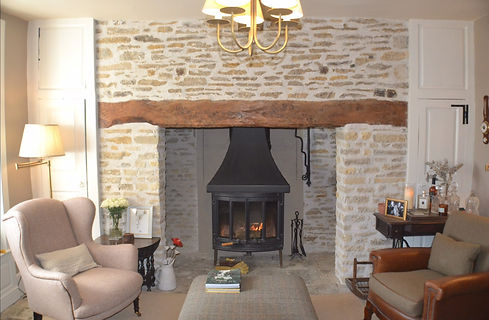
Ingelnook fireplace
Lime plastering

Materials

Russet and Sage carefully consider the use of materials to ensure an effective and appropriate restoration. We are proficient with all limes, including quicklime, lime putty, hydrated lime and all strengths of natural hydraulic lime. Combined with appropriately chosen sand mixes and pozzolans where required, you can be sure that the work is traditional, beautiful and conforms with conservation standards.

Sustainability within the built environment

What is lime mortar?


Limestone is burnt in a lime kiln which releases carbon dioxide and turns it into quicklime. When mixed with water, the quicklime slakes and produces lime putty (or a 'hot-mixed' mortar when sand and water are added together). Once these limes are applied to a building, the lime carbonates. This means the lime sequesters a high percentage of the carbon dioxide lost during the burning process. The lime in lime mortar effectively turns back to limestone.

The carbon cost of lime compared to cement is dramatically lower for this reason. 

Sustainability

Next Steps

To enquire about this service or for guidance on which level of service is required, please get in touch using the button below.

bottom of page